2021–2022/Mobile/Completed
BSchedule
Staff and customer booking apps on one scheduling API.
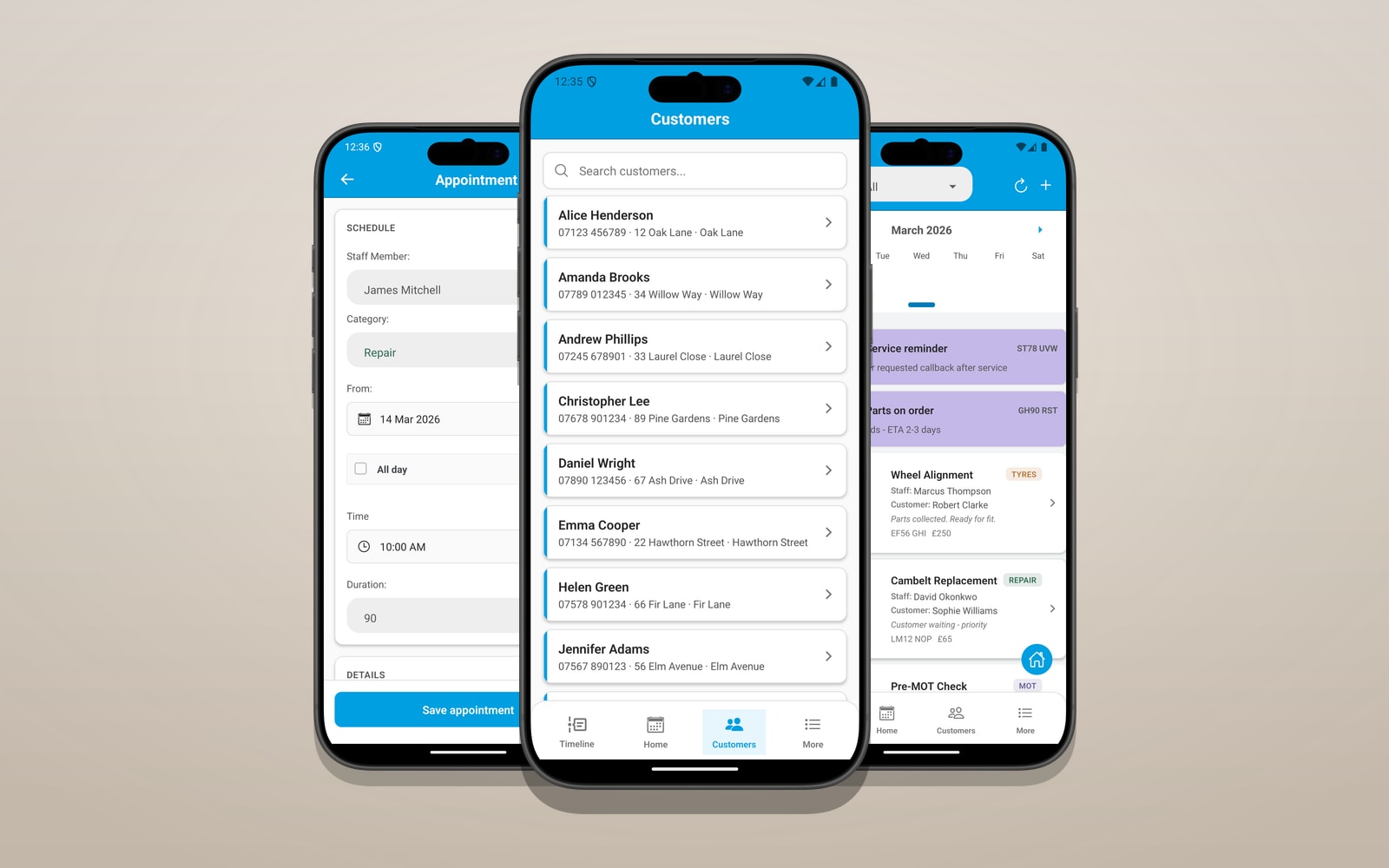
Two React Native clients — staff/admin and customer — against a single Laravel REST API: appointments, calendar/timeline, job cards, notices, and garage-style service categories. One schedule source of truth for both audiences.
- Two apps, one API
- Staff + customer portals
- Production booking system
The Problem
A business client needed scheduling for two audiences — staff managing availability and jobs, and customers booking appointments — without two backends that would drift apart.
What I Built
BSchedule is two React Native apps (staff/admin and customer) against one Laravel REST API / MySQL:
- Appointments create/edit/search; calendar and timeline (notes, reminders).
- Staff and customer management; job cards; notice board.
- Garage-style service categories (Service, Repair, MOT, Tyres, Diagnostic).
- Google Sign-in for staff and customer accounts.
Product host: bscheduled.co.uk.
Major Features
- Dual portals — staff depth vs customer booking surface on the same schedule.
- Calendar + jobs — day views, job cards, notices, vehicle reminders.
- Single API — availability and bookings live in one place.
- Auth — Google Sign-in across both apps.
Key Challenges
One REST API had to serve different permissions and shapes of the same schedule: staff needed broad read/write; customers needed a narrow booking surface. Endpoint design up front mattered more than shipping two “almost the same” APIs.
Results
BSchedule shipped as a production booking system — staff and customer apps on one shared API — so scheduling data couldn’t fork.
Stack Decisions
A single Laravel API was chosen specifically to avoid the classic failure mode of staff/customer systems: two stacks, two truths. React Native + Redux kept both clients shippable on the same design language without a web-only compromise.
Building something in this space?
I ship mobile, web, and AI product surfaces end-to-end — from product UI to payments and store releases.
Get in touch →